King
Designing an MVP to enable strategic business partnerships
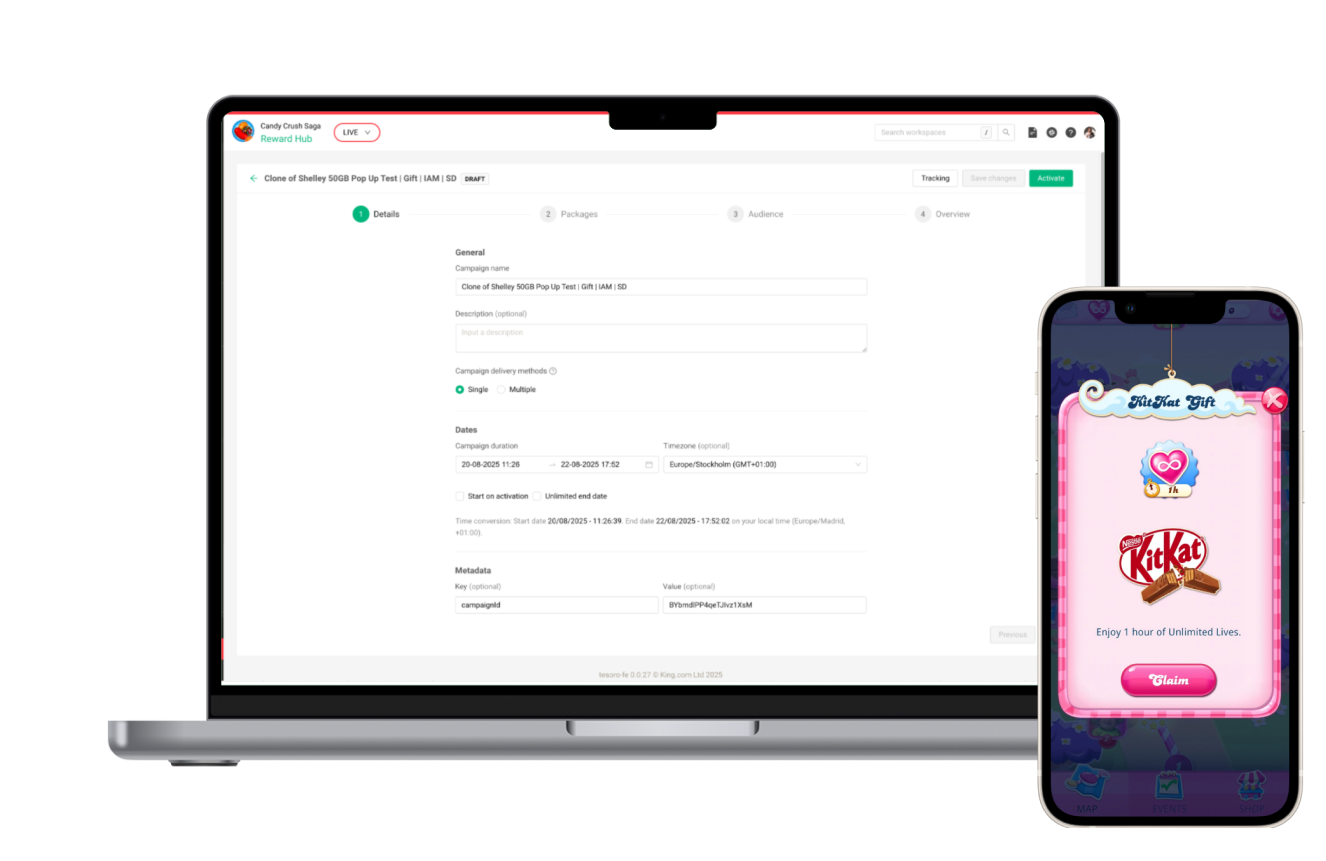
A new in-game rewards configuration tool for Live Marketing teams, supporting large-scale brand partnerships like KitKat
MVP Definition
Internal tool
B2B
Product strategy
Role
UX / Product designer (end-to-end)
Timeline
3 months - 2023
Platform
Web app, internal tools platform (UP)
Team
PM, EM, FE Dev, BE Devs, QA
Users
Live Marketing Operators
Constraints
Legacy decommission, UP dependencies, SQL segmentation, QR requirement
King is the gaming company behind the mobile game Candy Crush. Having a SaaS gaming business model, they deliver new experiences to millions of active players daily. These experiences are set up through a series of internal operational tools owned by different teams.
As the sole designer in the team I was responsible for defining and delivering the MVP design for a new in-game rewards management tool for the Marketing LiveOps team.
Business outcome
Strategic business partnership delivered
KitKat campaign enabled and delivered to millions of customers
Users outcome
+20% user satisfaction increase
based on CSAT post-release survey
Team outcome
Stronger cross-functional alignment
co-design + feedback loops increased ownership and efficiency
Problem
When legacy tooling limits business ambition
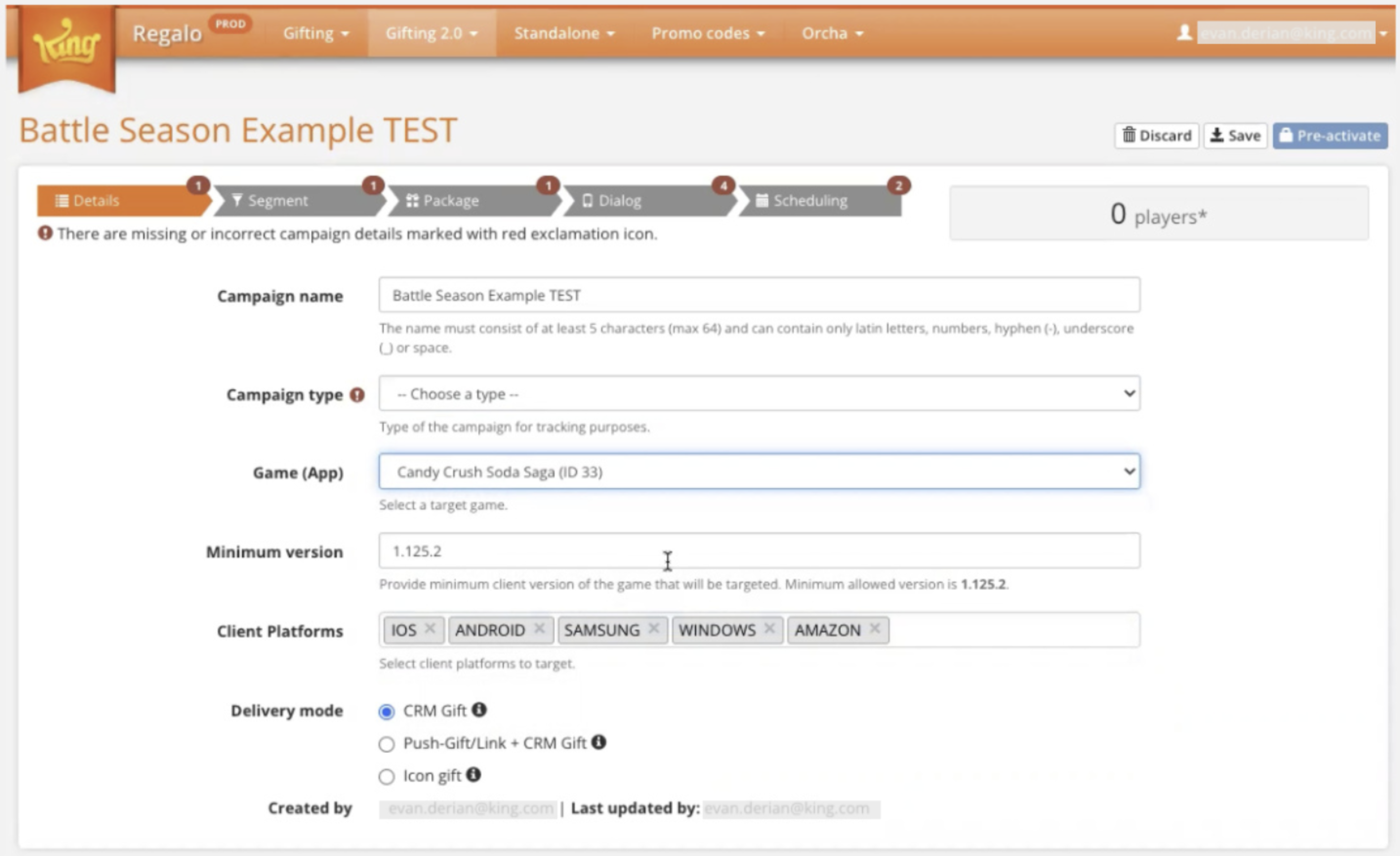
The Live Marketing Operations teams relied on an outdated internal tool to configure in-game rewards. The tool was going to be decommissioned due to legacy code, while King was transitioning isolated tools into a new ecosystem of interconnected internal tools called Unified Platform (UP).
At the same time, King was pursuing a business partnership with KitKat. UP’s improved tech capabilities could allow the generation of multiple custom links/QR codes, a critical requirement to enable the partnership.
The challenge
Design and define an MVP for a new tool (UP Reward Hub) in 3 months, so engineering could build it in time to support the partnership.
What success looked like (Success criteria)
We aligned early on what “success” meant for this project:
- Month 1 milestone: Validate product requirements through user research → unlock engineering estimation of the MVP.
- Month 3 milestone: MVP defined and ready for development to deliver a functional tool in time for the partnership case.
Research
Grounding product decisions in operational reality
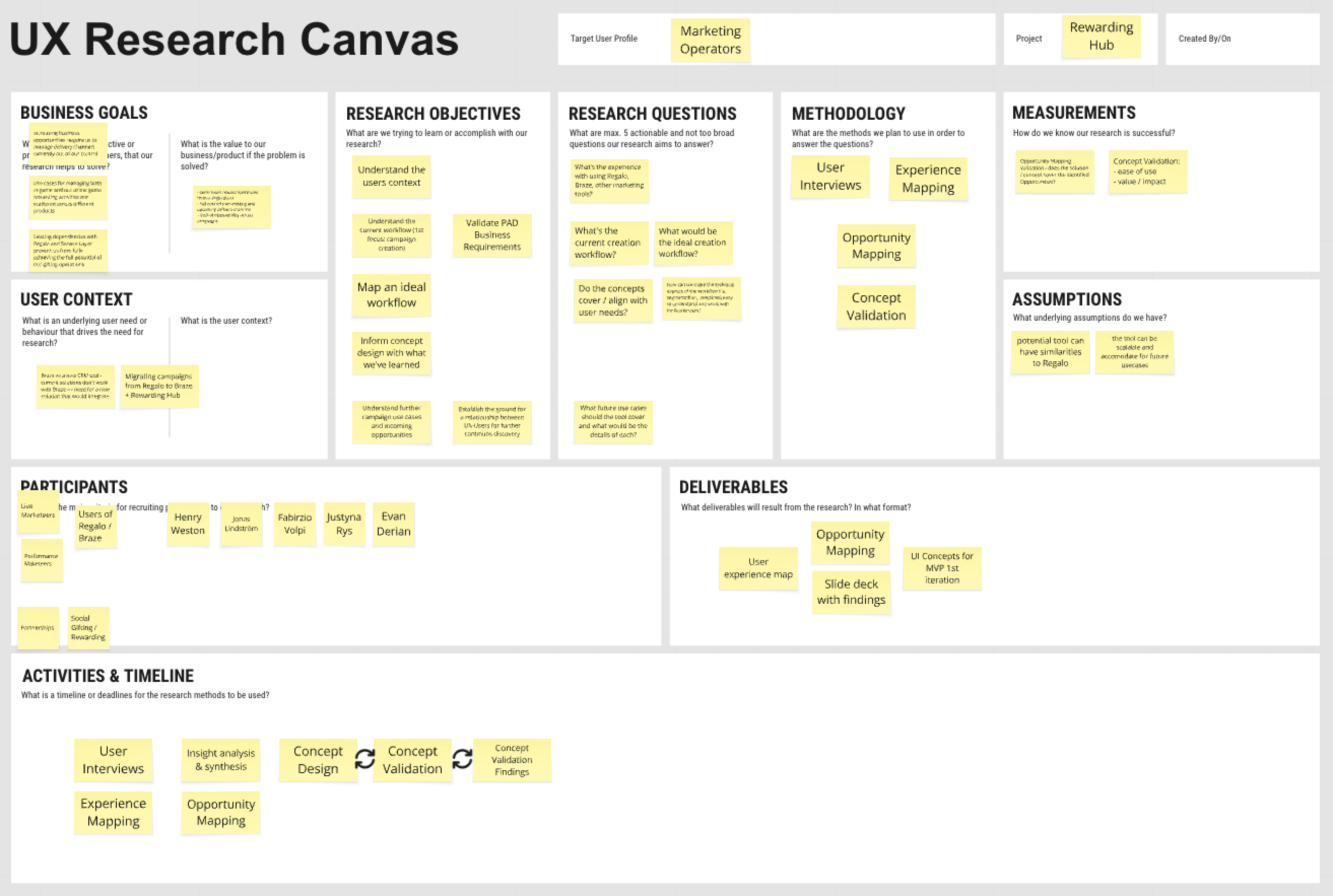
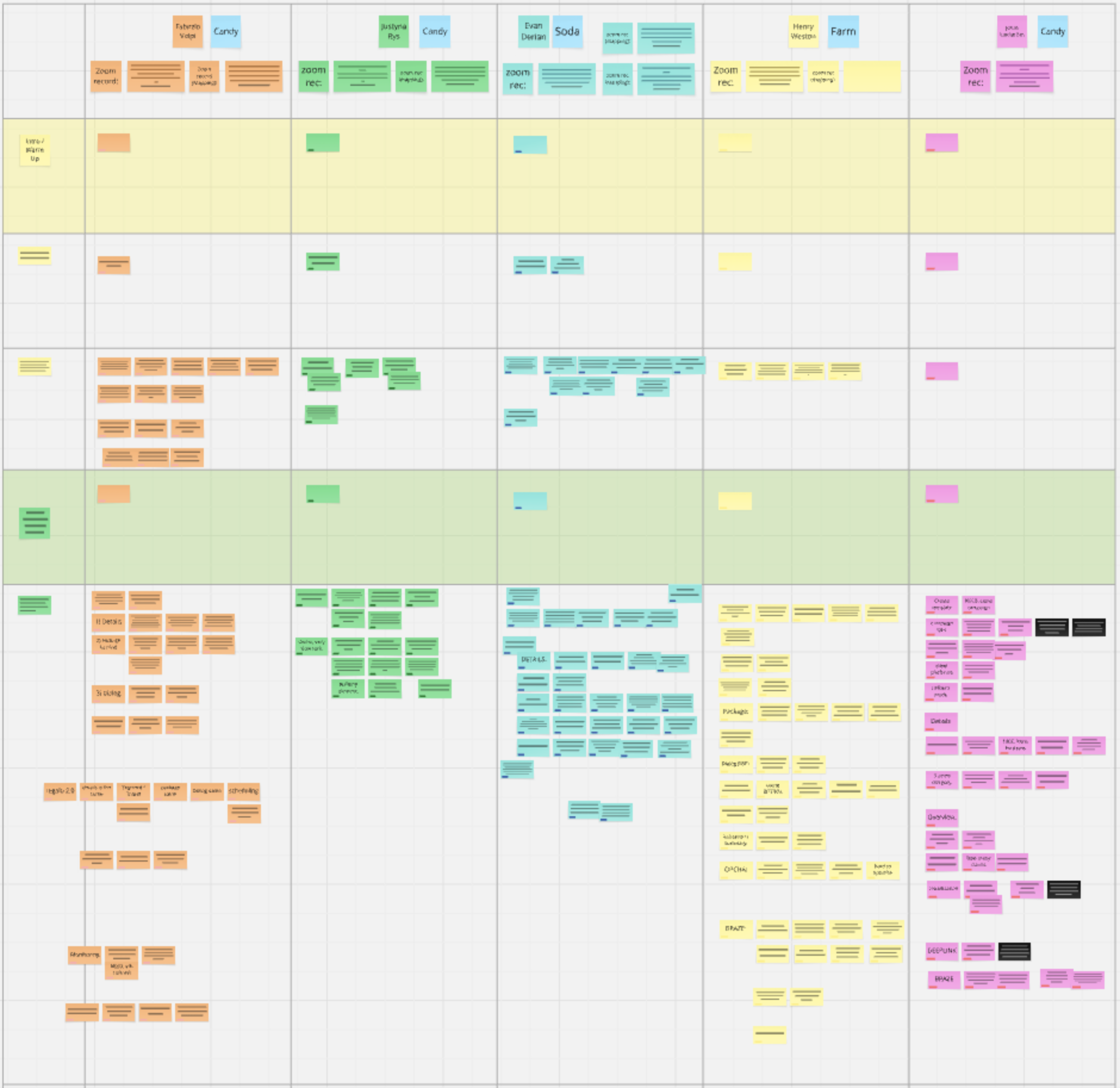
We defined a research strategy around a UX Research Canvas to align early on around objectives, key questions, methodologies, and participants.
00 - Research goals
- Understand user flow and context; recognise pain points and friction in reward campaign creation workflows
- Validate product requirements through actual user needs
- Inform product and engineering on the most relevant features to define MVP scope
01 - Heuristic review & UP platform analysis
- Audited rewards creation in the legacy tool to identify friction, finding unclear hierarchy and non-relevant inputs
- Reviewed other UP tools and mapped similar flows to replicate touchpoints and keep consistency across tools
02 - User interviews
- Conducted multiple one-on-one interviews with LiveOps marketing operators, to map their workflow based on the legacy tool usage
- Revealed pain points: cumbersome categorisation of campaigns, navigation issues, lack of clarity for itemisation
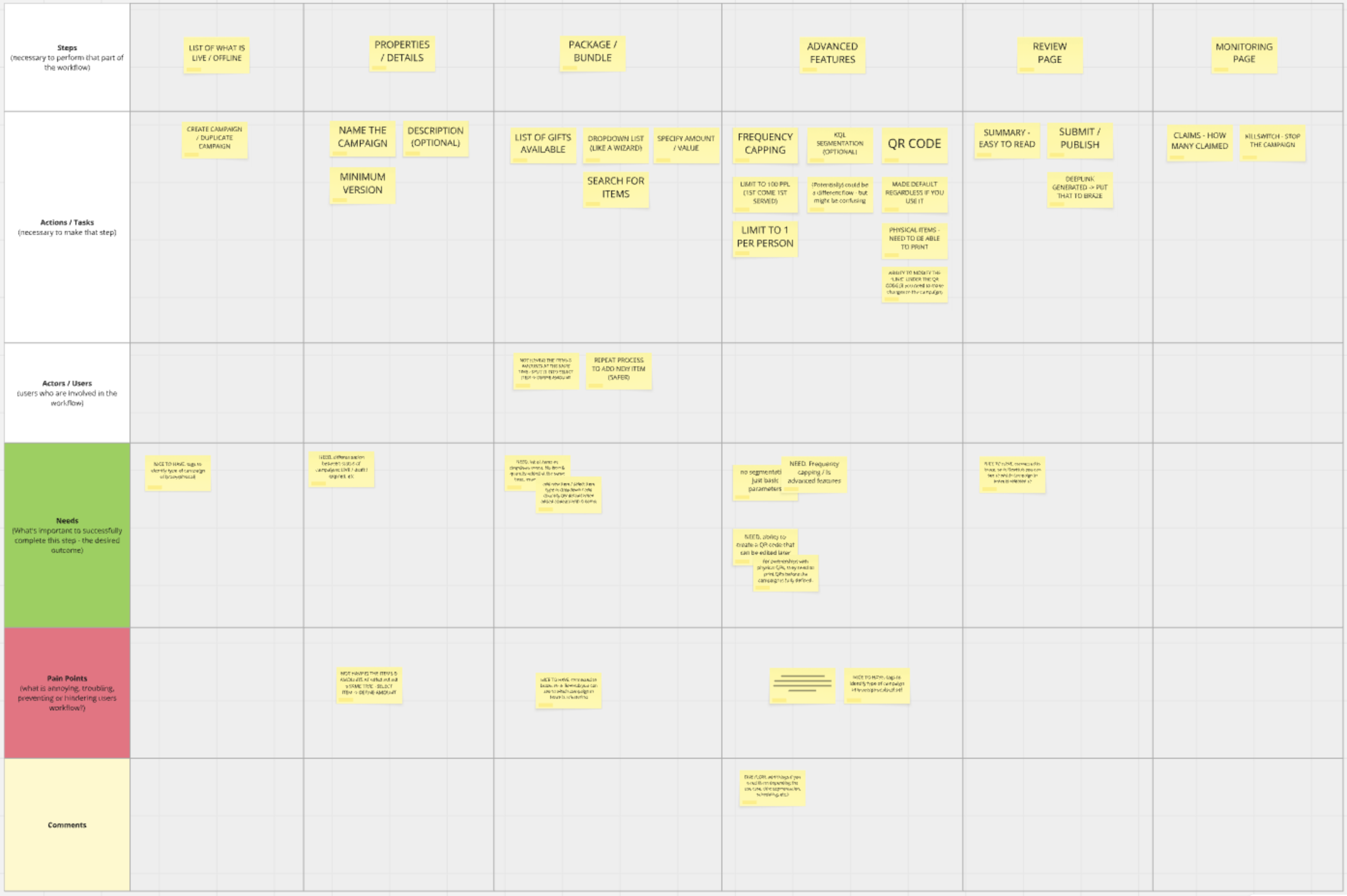
03 - Experience mapping workshop
- Workshop with the same participants to challenge:
- Order of steps in reward creation flow
- Actions/tasks per step (reduced to most relevant)
- Pain points and opportunities
- Helped the team visualise user rationale and where simplification would have the most impact
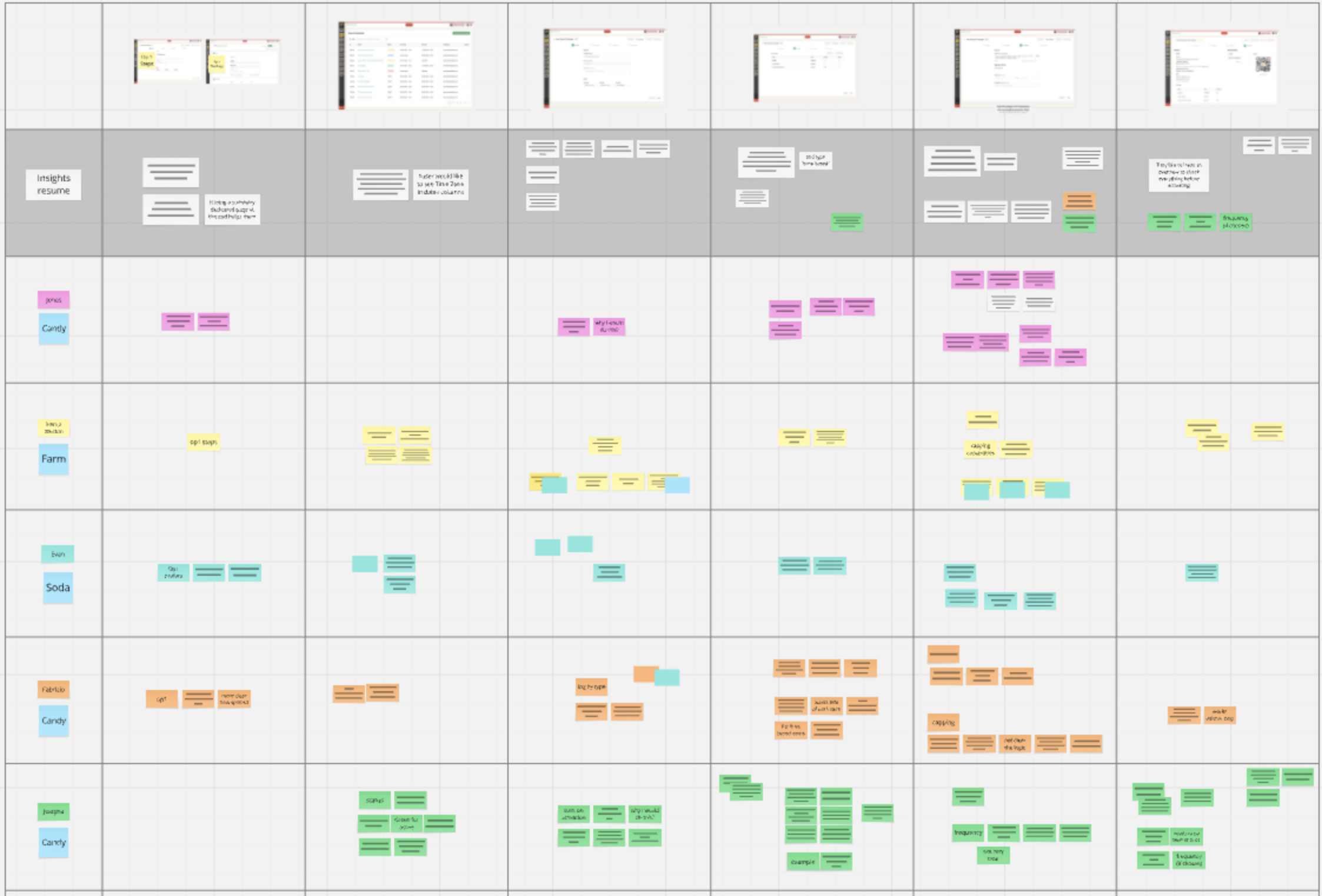
04 - Affinity diagram & heatmap
- Grouped insights into themes
- Heatmapped friction intensity across the flow
- Prioritised MVP features based on user feedback
05 - Sharing findings
- Presented a detailed findings report to key stakeholders: Tech Leads, PM, EM, Devs
- Walked through insights and clarified open questions to align the team
Definition
Making deliberate MVP trade-offs, together
I proposed a collaborative and participative approach to maximise efficiency through co-design sessions. Understanding UX as a team sport, I encouraged developers and product manager to contribute ideas and thoughts.
This helped us align early on:
- User needs (from research insights)
- Product requirements (business case)
- Tech feasibility (UP constraints and dependencies)
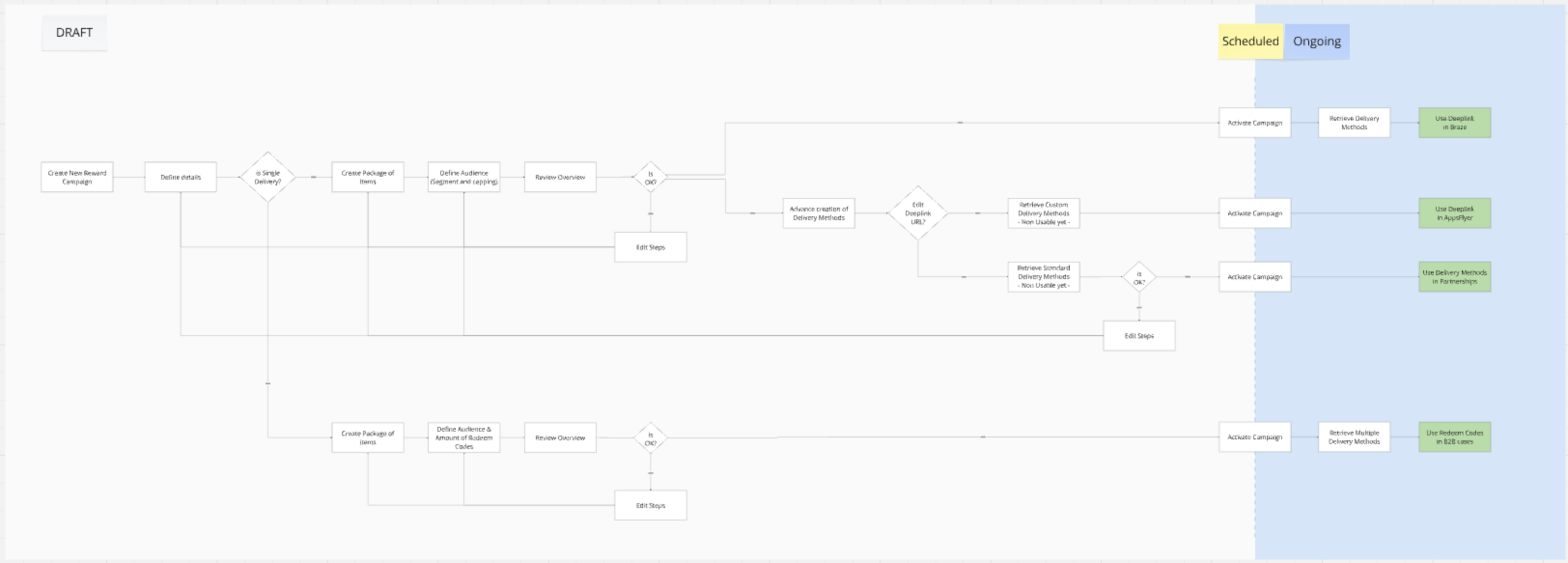
MVP scope (what we prioritised)
- Simplified reward creation flows, edit capabilities, and overview
- Clear error handling (setting up safety nets)
- Alignment with UP design language and consistent patterns
- Clear dependencies across UP: itemisation, links/QR generation, SQL targeting population
- Scalability for future reward types
With scope defined, I created low-fidelity wireframes to keep conversations focused on logic and structure.
This allowed us to move fast and reach the first milestone: engineering estimation, unlocking development early so design and engineering could work in parallel.
Iterative process
Reducing risk through continuous validation
High-fidelity prototype
- Once we aligned on the core MVP structure, I moved into high-fidelity design and prototyping.
- Applied a clear separation between configuration and overview through a wizard model, best suited to our users mental model
- Used the UP design system to ensure consistency and standardisation
- Created a fully usable MVP prototype for testing
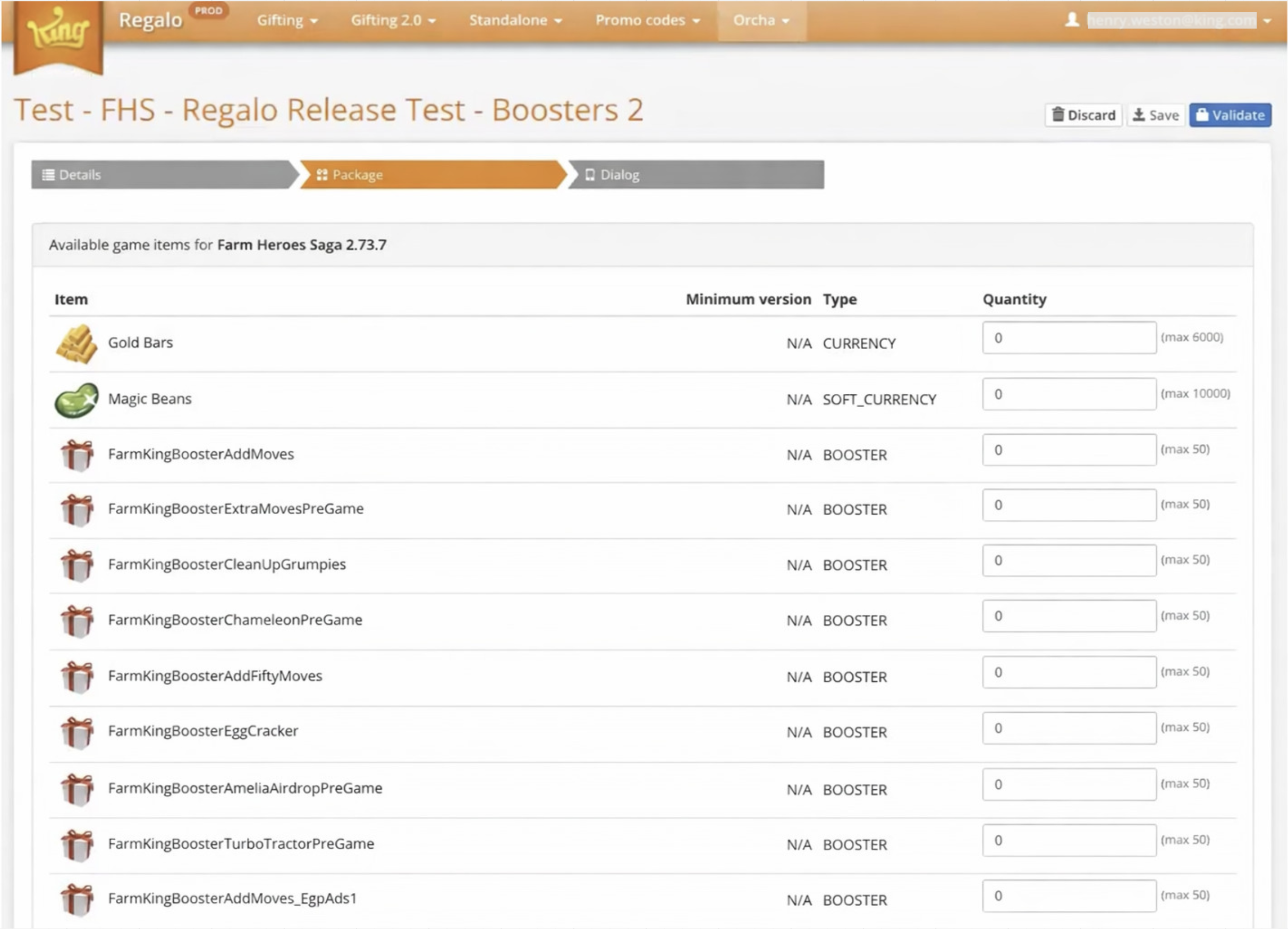
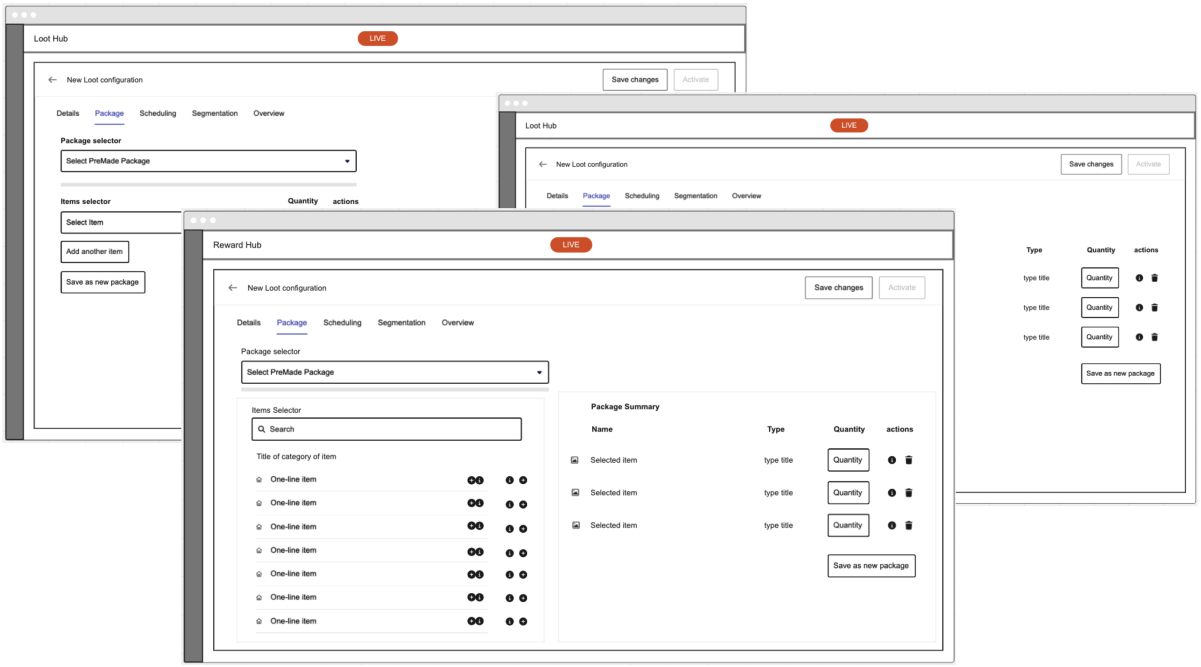
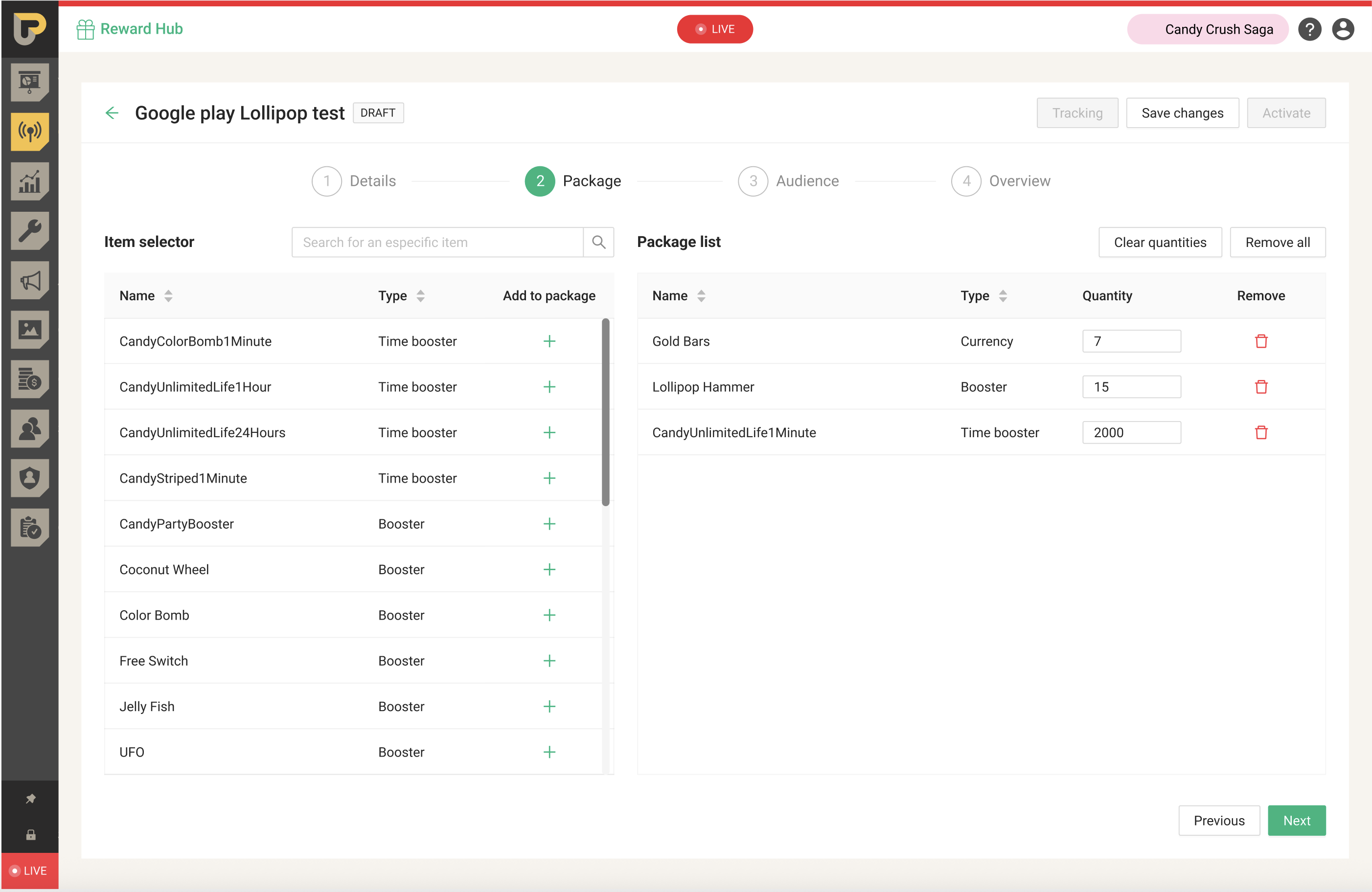
Itemisation page: from Legacy through Definition to High Fidelity
Testing and validation
- I ran weekly user testing sessions with marketing operators (the same ones involved in earlier phases), iterating quickly between rounds. Between rounds, I informed developers and product about results to keep alignment and maintain speed.
- I also reached out to three designers working within UP tools and ran design critique sessions to ensure Reward Hub complied with platform standards. This was not going to be an isolated tool, but part of an existing ecosystem, alignment in patterns was key.
- After three rounds of testing, I ended with a polished and validated MVP version.
Delivery
Establishing a new foundation for reward operations
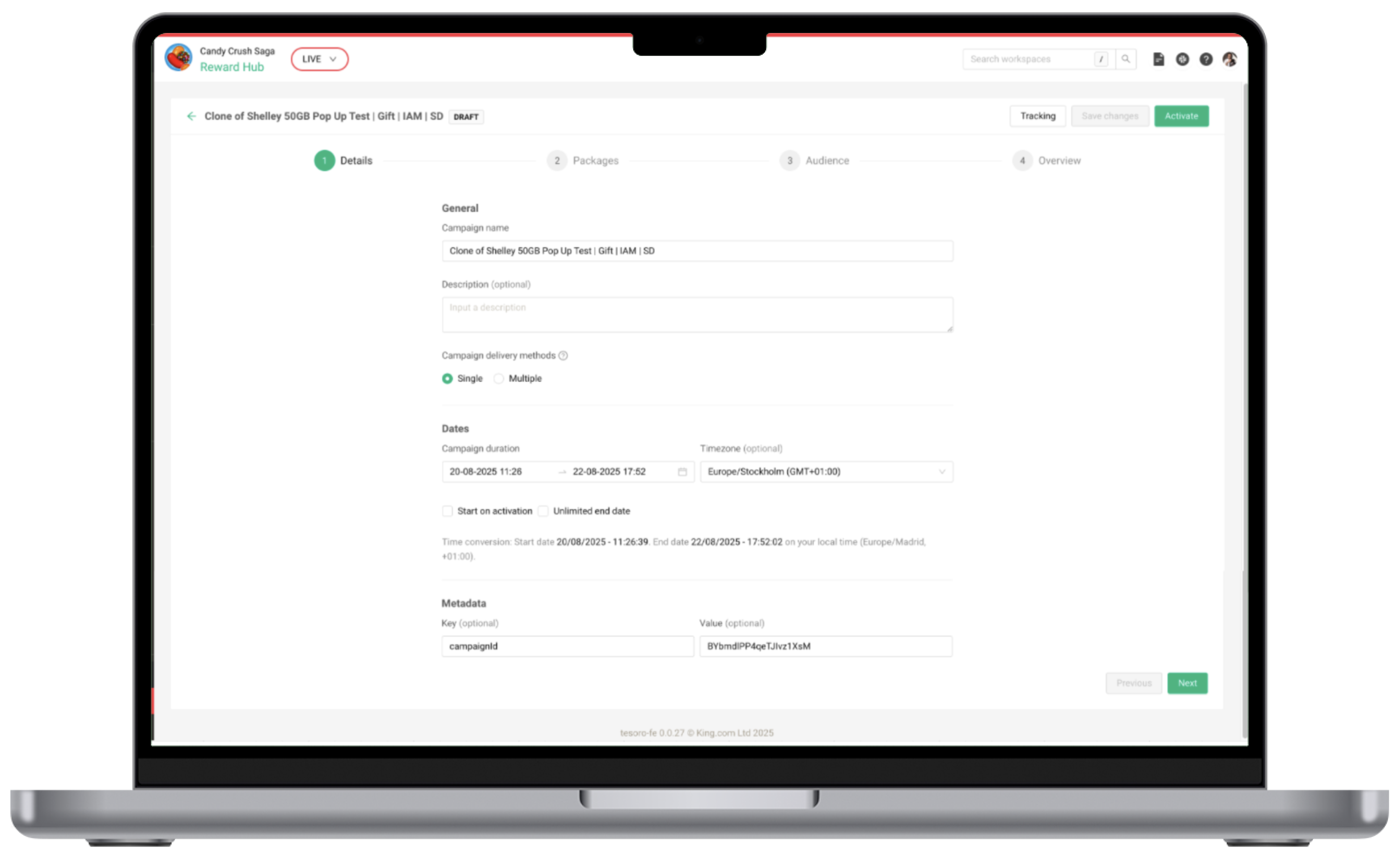
After 3 months of UX process, I delivered the MVP for Reward Hub, the new UP platform in-game reward management tool.
What I delivered
- Design components and detailed documentation for handoff to engineering
- An informed and validated roadmap for next improvement releases
Key improvements vs the legacy tool
- Streamlined rewards creation flow: simplified steps, reduced cognitive load, reduced over-categorisation
- Better visibility of item availability and selection
- Re-use of older campaigns for testing variants and recurrent instances
- Expanded single and multiple links/QR codes generation options and control
Outcomes
Unlocking value for the business, users, and teams
Business outcome
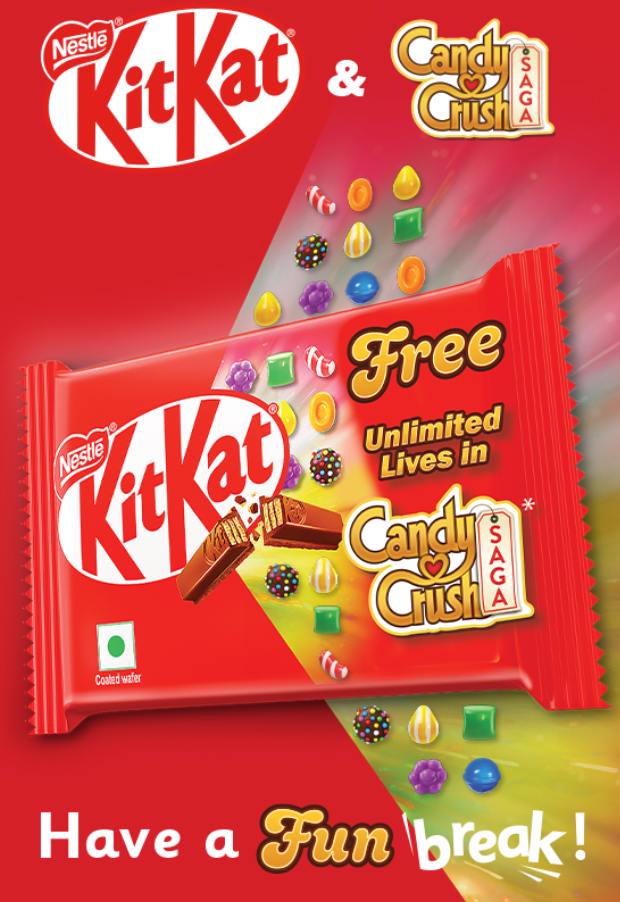
Successful business partnership with KitKat. Delivering the MVP definition on schedule (3 months) and collaborating closely allowed engineering to develop the tool on time and run technical tests in controlled scenarios. QR code generation linked to rewards made the partnership possible and delivered to millions of customers.
User outcome
User satisfaction improved by up to 20%. Simpler workflows and faster configurations, plus users feeling listened to and seeing their pain points addressed, improved satisfaction from 3.5 to 4.5/5, according to post-release surveys.
Team outcome
Empowered cross-functional alignment. Workshops and co-design sessions increased ownership and engagement. Feedback from the team included:“The UX process empowered the team (…) improved commitment and accountability to the project’s success.” - Engineering Manager “Constantly speaking about the product is a great way to learn and improve our developments.” - Backend Developer
Learnings
What this project sharpened in my practice
Define a research strategy
Having methodologies directly linked to specific objectives helped us validate requirements from a user perspective while identifying friction in the flow.
Close collaboration boosts efficiency
Co-design and early engineering involvement allowed us to balance user needs, business requirements, and tech feasibility. It also enabled parallel design/development tracks with strong alignment.
Look for workarounds to surface tech constraints
When constraints can’t be removed, reduce user pain around them. In the MVP, targeting had to be defined by an SQL expression. Marketing operators struggled with SQL, so we provided pre-made SQL templates they could input directly.
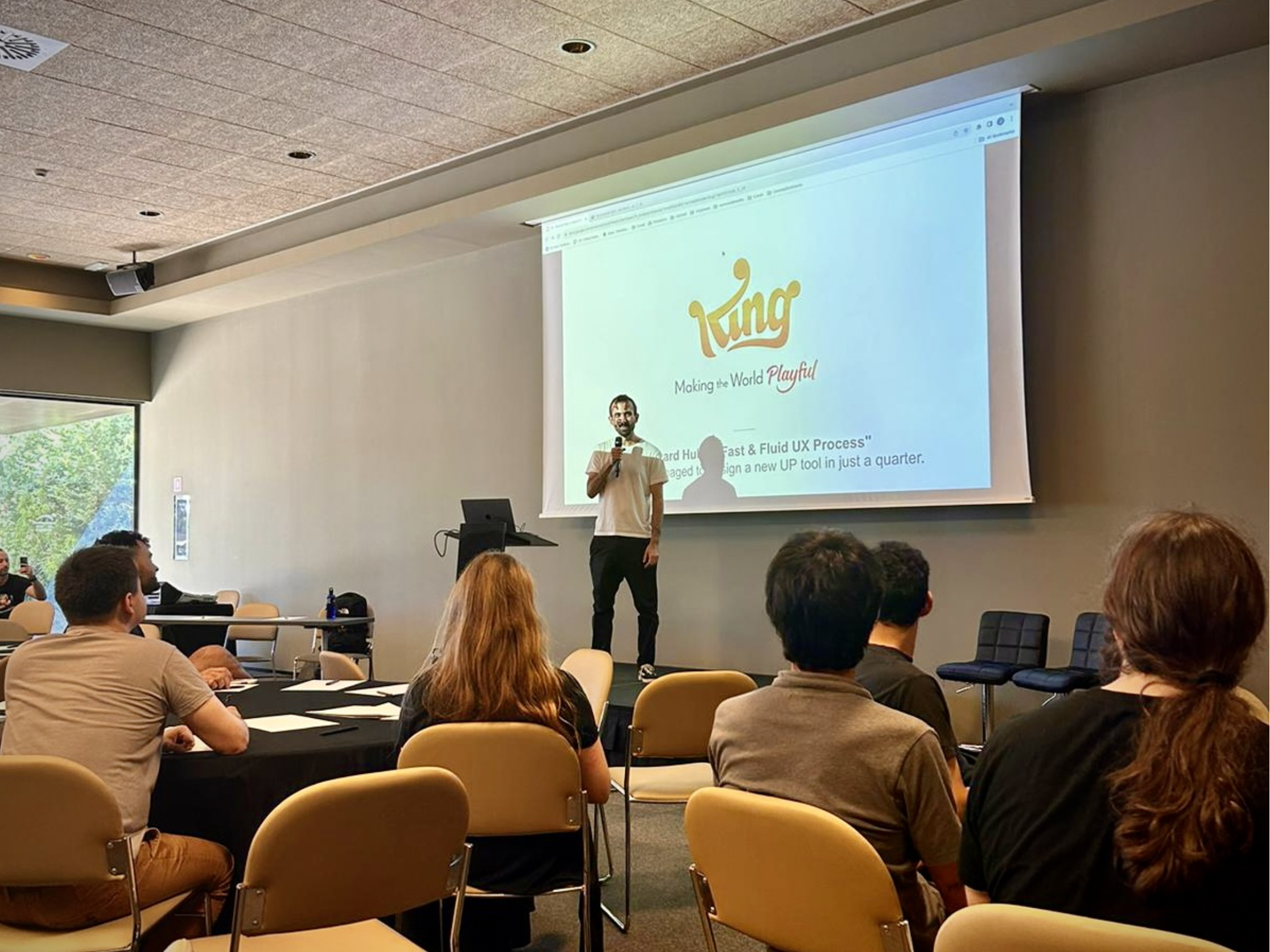
Sharing is caring :)
This project was selected as one of the year’s success cases for the annual department company gathering. I presented the UX process and outcomes in front of 100+ people, including King’s CTO and leadership team.
Want to know more? Let’s connect
If you’d like to discuss this project or explore other work, feel free to reach out.
Get in touch
King
Designing an MVP to enable strategic business partnerships
A new in-game rewards configuration tool for Live Marketing teams, supporting large-scale brand partnerships like KitKat
MVP Definition
Internal tool
B2B
Product strategy
Role
UX / Product designer (end-to-end)
Timeline
3 months - 2023
Platform
Web app, internal tools platform (UP)
Team
PM, EM, FE Dev, BE Devs, QA
Users
Live Marketing Operators
Constraints
Legacy decommission, UP dependencies, SQL segmentation, QR requirement
King is the gaming company behind the mobile game Candy Crush. Having a SaaS gaming business model, they deliver new experiences to millions of active players daily. These experiences are set up through a series of internal operational tools owned by different teams.
As the sole designer in the team I was responsible for defining and delivering the MVP design for a new in-game rewards management tool for the Marketing LiveOps team.
Business outcome
Strategic business partnership delivered
KitKat campaign enabled and delivered to millions of customers
Users outcome
+20% user satisfaction increase
based on CSAT post-release survey
Team outcome
Stronger cross-functional alignment
co-design + feedback loops increased ownership and efficiency
Problem
When legacy tooling limits business ambition
The Live Marketing Operations teams relied on an outdated internal tool to configure in-game rewards. The tool was going to be decommissioned due to legacy code, while King was transitioning isolated tools into a new ecosystem of interconnected internal tools called Unified Platform (UP).
At the same time, King was pursuing a business partnership with KitKat. UP’s improved tech capabilities could allow the generation of multiple custom links/QR codes, a critical requirement to enable the partnership.
The challenge
Design and define an MVP for a new tool (UP Reward Hub) in 3 months, so engineering could build it in time to support the partnership.
What success looked like (Success criteria)
We aligned early on what “success” meant for this project:
- Month 1 milestone: Validate product requirements through user research → unlock engineering estimation of the MVP.
- Month 3 milestone: MVP defined and ready for development to deliver a functional tool in time for the partnership case.
Research
Grounding product decisions in operational reality
We defined a research strategy around a UX Research Canvas to align early on around objectives, key questions, methodologies, and participants.
00 - Research goals
- Understand user flow and context; recognise pain points and friction in reward campaign creation workflows
- Validate product requirements through actual user needs
- Inform product and engineering on the most relevant features to define MVP scope
01 - Heuristic review & UP platform analysis
- Audited rewards creation in the legacy tool to identify friction, finding unclear hierarchy and non-relevant inputs
- Reviewed other UP tools and mapped similar flows to replicate touchpoints and keep consistency across tools
02 - User interviews
- Conducted multiple one-on-one interviews with LiveOps marketing operators, to map their workflow based on the legacy tool usage
- Revealed pain points: cumbersome categorisation of campaigns, navigation issues, lack of clarity for itemisation
03 - Experience mapping workshop
- Workshop with the same participants to challenge:
- Order of steps in reward creation flow
- Actions/tasks per step (reduced to most relevant)
- Pain points and opportunities
- Helped the team visualise user rationale and where simplification would have the most impact
04 - Affinity diagram & heatmap
- Grouped insights into themes
- Heatmapped friction intensity across the flow
- Prioritised MVP features based on user feedback
05 - Sharing findings
- Presented a detailed findings report to key stakeholders: Tech Leads, PM, EM, Devs
- Walked through insights and clarified open questions to align the team
Definition
Making deliberate MVP trade-offs, together
I proposed a collaborative and participative approach to maximise efficiency through co-design sessions. Understanding UX as a team sport, I encouraged developers and product manager to contribute ideas and thoughts.
This helped us align early on:
- User needs (from research insights)
- Product requirements (business case)
- Tech feasibility (UP constraints and dependencies)
MVP scope (what we prioritised)
- Simplified reward creation flows, edit capabilities, and overview
- Clear error handling (setting up safety nets)
- Alignment with UP design language and consistent patterns
- Clear dependencies across UP: itemisation, links/QR generation, SQL targeting population
- Scalability for future reward types
With scope defined, I created low-fidelity wireframes to keep conversations focused on logic and structure.
This allowed us to move fast and reach the first milestone: engineering estimation, unlocking development early so design and engineering could work in parallel.
Iterative process
Reducing risk through continuous validation
High-fidelity prototype
- Once we aligned on the core MVP structure, I moved into high-fidelity design and prototyping.
- Applied a clear separation between configuration and overview through a wizard model, best suited to our users mental model
- Used the UP design system to ensure consistency and standardisation
- Created a fully usable MVP prototype for testing
Itemisation page: from Legacy through Definition to High Fidelity
Testing and validation
- I ran weekly user testing sessions with marketing operators (the same ones involved in earlier phases), iterating quickly between rounds. Between rounds, I informed developers and product about results to keep alignment and maintain speed.
- I also reached out to three designers working within UP tools and ran design critique sessions to ensure Reward Hub complied with platform standards. This was not going to be an isolated tool, but part of an existing ecosystem, alignment in patterns was key.
- After three rounds of testing, I ended with a polished and validated MVP version.
Delivery
Establishing a new foundation for reward operations
After 3 months of UX process, I delivered the MVP for Reward Hub, the new UP platform in-game reward management tool.
What I delivered
- Design components and detailed documentation for handoff to engineering
- An informed and validated roadmap for next improvement releases
Key improvements vs the legacy tool
- Streamlined rewards creation flow: simplified steps, reduced cognitive load, reduced over-categorisation
- Better visibility of item availability and selection
- Re-use of older campaigns for testing variants and recurrent instances
- Expanded single and multiple links/QR codes generation options and control
Outcomes
Unlocking value for the business, users, and teams
Business outcome
Successful business partnership with KitKat. Delivering the MVP definition on schedule (3 months) and collaborating closely allowed engineering to develop the tool on time and run technical tests in controlled scenarios. QR code generation linked to rewards made the partnership possible and delivered to millions of customers.
User outcome
User satisfaction improved by up to 20%. Simpler workflows and faster configurations, plus users feeling listened to and seeing their pain points addressed, improved satisfaction from 3.5 to 4.5/5, according to post-release surveys.
Team outcome
Empowered cross-functional alignment. Workshops and co-design sessions increased ownership and engagement. Feedback from the team included:“The UX process empowered the team (…) improved commitment and accountability to the project’s success.” - Engineering Manager “Constantly speaking about the product is a great way to learn and improve our developments.” - Backend Developer
Learnings
What this project sharpened in my practice
Define a research strategy
Having methodologies directly linked to specific objectives helped us validate requirements from a user perspective while identifying friction in the flow.
Close collaboration boosts efficiency
Co-design and early engineering involvement allowed us to balance user needs, business requirements, and tech feasibility. It also enabled parallel design/development tracks with strong alignment.
Look for workarounds to surface tech constraints
When constraints can’t be removed, reduce user pain around them. In the MVP, targeting had to be defined by an SQL expression. Marketing operators struggled with SQL, so we provided pre-made SQL templates they could input directly.
Sharing is caring :)
This project was selected as one of the year’s success cases for the annual department company gathering. I presented the UX process and outcomes in front of 100+ people, including King’s CTO and leadership team.
Want to know more? Let’s connect
If you’d like to discuss this project or explore other work, feel free to reach out.
Get in touch